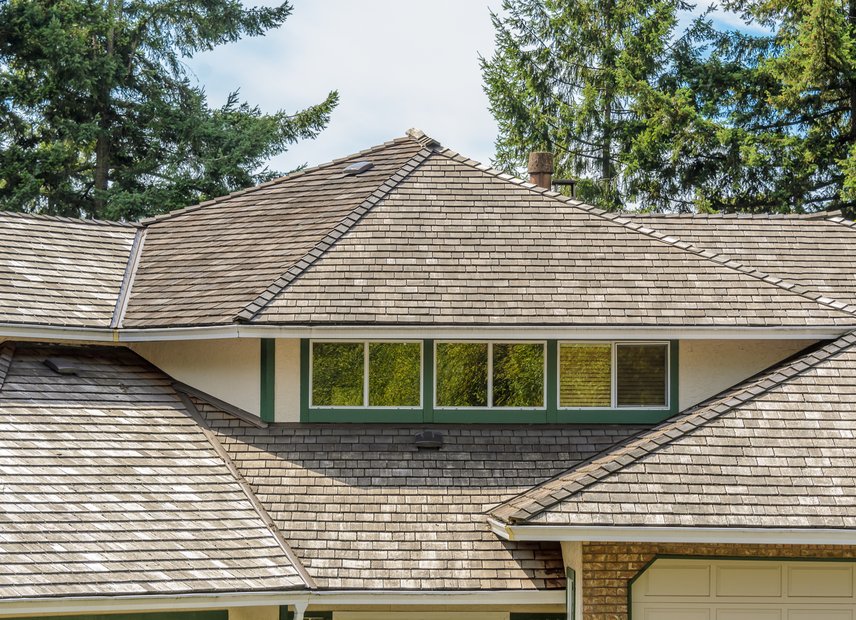
Cedar shake is part of what makes the older Greenwood Village estates look the way they do. The city's roofing guidelines carry a dedicated cedar shake section, and whole streets in the east side neighborhoods still wear it. We repair shake, replace shake, and, when a homeowner asks, give the honest answer about whether shake still makes sense for their house, an answer that depends on the roof, the insurer and the budget, not on what we would rather sell.
The honest conversation about cedar shake in 2026 runs through your insurance policy. Wood roofs in a documented hail corridor cost more to insure, some carriers surcharge them heavily, and a few decline them outright. Meanwhile Colorado law requires insurers to offer premium discounts on UL 2218 Class 4 roofs. That spread, surcharge on one side, discount on the other, is why many Village estates have moved to heavy designer asphalt or synthetic shake profiles that read as wood from the curb. When we quote a shake replacement, we quote the like for like cedar and the Class 4 alternative side by side with the insurance math visible.
None of that means shake is finished here. Cedar handles our dry summers and freeze cycles well, breathes in a way asphalt does not, and on the right architecture nothing else looks correct. Keeping it means maintenance: debris cleared from keyways so the roof can dry, moss kept off the north slopes, ridge lines rebuilt before they open, and wind checks after every big chinook. A shake roof maintained on that schedule reaches its design life. One ignored until it leaks becomes a full replacement conversation ten years early.
A shake roof's real age shows in specific places: how deep the surface checking runs, whether butt ends have begun to cup and split in patterns rather than singles, how much wood is left at the keyway edges, and what the ridge caps look like, because ridges fail first. A roof with twenty percent of its shakes weathered thin is on the countdown no matter how good the rest looks. When we inspect shake we grade those indicators and give you a range in years, not a scare. Plenty of Village shake roofs have another decade of honest service in them, and the report says so when it is true.
One more practical note: shake repairs want dry wood and moderate weather, so the best repair windows here are late spring and early fall. Booking outside a storm rush also means the repair uses hand-selected cedar rather than whatever the supply house has left in a busy week, and on a visible slope that selection shows.
A shake roof with a sound field and localized failures is a repair candidate, and an honest one costs a fraction of the replacement conversation. The pattern we look for: damage concentrated on one exposure, usually the west and south faces that take the wind and sun, while the sheltered slopes still carry thick, tight wood. Rebuilding a ridge, reworking a flashing line and swapping fifty shakes on the weather side can buy five to eight quiet years on a roof like that. What repair cannot fix is a field that has gone uniformly thin; at that stage every fix becomes a down payment on the next one, and we will say so rather than sell the cycle.
Shake repairs under 100 square feet skip the city permit, so most fixes start as soon as materials do. After hail, our bruise mapping gives you a real verdict before anyone talks claims. Start with the free inspection, and if the answer is that your shake has another decade in it, that is exactly what the report will say. Call (720) 702-8770.
Tell us where the roof is and we will call you back the same business day. (720) 702-8770