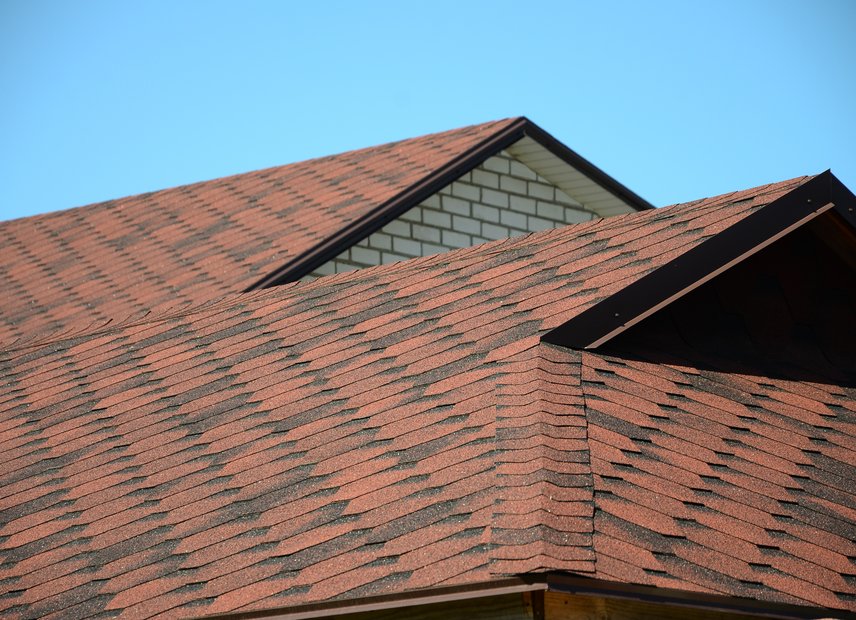
A roof replacement in Greenwood Village is rarely the cookie cutter job it is two suburbs over. The housing stock east of I-25 is custom construction from the 1970s through the 1990s, with steep pitches, long valleys, multiple dormers and materials that range from architectural asphalt to concrete tile and cedar shake. We scope each replacement to the specific roof, not to a per square formula.
The city requires a permit for replacement of 100 square feet or more of roof covering, which is to say every real replacement. The application has to identify existing and proposed materials, manufacturer and product information. Fees are valuation based, set by the city's own calculator, and include a plan review fee, use tax and the Arapahoe County Open Space tax. If you are changing materials and the new roof is heavier, asphalt to tile being the classic case, the city requires a structural evaluation or truss verification letter sealed by a Colorado licensed design professional before the permit issues. We coordinate that letter as part of the job.
One piece of good news from the city's own July 2026 guidelines: mid-roof inspections are not required for reroofing projects unless the Building Division specifically directs one. Some roofer websites still claim otherwise. The practical effect is one less scheduling delay in the middle of your job.
For asphalt, we quote architectural and Class 4 impact resistant lines side by side. Colorado law requires insurers to offer a premium discount for UL 2218 Class 4 roofs, and in a hail zone like this one the upgrade often pays for itself between storms. For tile and shake homes, replacement is a bigger conversation, sometimes the answer is a full re-roof in the same material, sometimes a restoration, and sometimes a material change with the structural letter handled. Our tile and cedar shake pages cover those paths in detail, and the cost guide puts numbers on all of them.
Every replacement quote we issue is a line item document, not a lump sum with a logo. It names the shingle or tile line and color, the underlayment product, the ice barrier brand and coverage area, flashing metals by gauge, ventilation components, fastener spec, deck replacement price per sheet, tear-off and haul-off, permit fees from the city calculator, and the exact warranty terms in writing. When two bids are a thousand dollars apart, the difference almost always hides in what the cheaper one declined to name. A scope this specific also protects you at final inspection, because the inspector is checking the roof against the permitted application, and ours match.
Colorado attics punish bad ventilation. Summer heat cooks underlayment from below, and winter temperature swings drive the freeze thaw cycles that shorten shingle life at this altitude. During tear-off we calculate the intake and exhaust balance the manufacturer requires, because an unbalanced system can quietly void the material warranty that makes a premium shingle worth buying. On the Village's larger rooflines this usually means verifying soffit intake actually flows and correcting exhaust with ridge vent rather than a patchwork of box vents. It costs little during a replacement and cannot be retrofitted cheaply afterward.
On asphalt replacements the one decision worth slowing down for is impact rating. A standard architectural shingle meets code and looks identical from the street; a UL 2218 Class 4 shingle costs roughly ten to twenty percent more on the material line and buys you two things: measurably better survival in the hail sizes the Village actually takes, and a premium discount your insurer is required by Colorado law to offer. On the roof sizes common east of I-25, the discount frequently retires the upcharge within a handful of renewal cycles. We quote both and show the spread.
Most single family replacements run one to three days on site once materials land, longer for tile and complicated rooflines. The permit clock gives us six months, so scheduling around Fiddler's Green season traffic or a DTC work week is never a squeeze. You get a start date in writing, a crew lead's cell number, and a magnetic sweep of the yard before we leave.
Tell us where the roof is and we will call you back the same business day. (720) 702-8770