West of I-25, Greenwood Village changes character. The custom clusters of the east side give way to acre lots, horse properties, long driveways and homes set deep off the road. The roofing changes with it: more cedar shake, more wind exposure, and more thought required before a crew and its trucks ever arrive. We roof across the west side of the Village, and this page covers what matters most on these properties.
A semi-rural lot changes how a job runs. Long driveways and deep setbacks mean material delivery gets planned, not improvised. We agree on staging and dumpster placement in advance, protect the drive, and keep equipment off septic fields and irrigation lines when you tell us where they are. On horse properties we keep gates closed, contain debris to one path, and run magnet sweeps every day, because a stray nail in a pasture is a real problem.
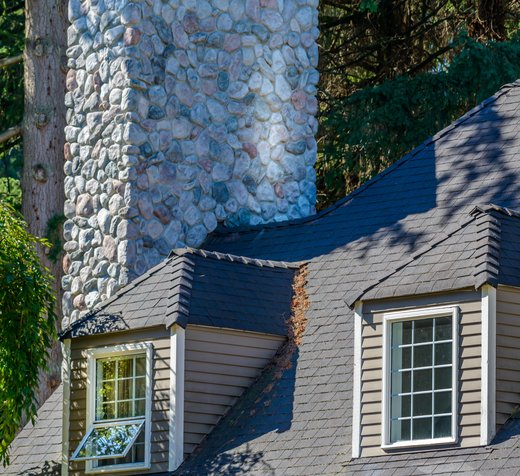
The housing itself spans decades of custom construction, and the rooflines show it. Steep main planes stepping down to low-slope sections, dormers, and long transitions between materials. Those transitions are where water finds its way in, and they are where we spend our time.
Many estates on this side of the Village still carry cedar shake, and the city's own roofing guidelines include a dedicated cedar shake section, with a minimum 4:12 slope for shake systems. Shake rewards upkeep: clearing valleys and keyways, replacing split and cupped shakes, and keeping debris off the roof. Our cedar shake maintenance guide covers the cycle in detail.
The harder conversation is insurance. Carriers have tightened on wood roofs, and shake owners increasingly see higher premiums, actual cash value endorsements, or pressure to replace the roof entirely. We wrote up the whole landscape in our guide to cedar shake insurance problems. For owners ready to move on, synthetic shake and other Class 4 systems keep the look while changing the insurance math.
Greenwood Village designs to a 100 mph 3-second gust, and the west side earns it. Open lots without a windbreak take gusts across long fetches, and roof edges, rakes and ridges carry the worst of the load. City code backs this up with a minimum of 6 fasteners per asphalt shingle and metal drip edge at eaves and rakes. We nail to that standard on every slope, not just the ones an inspector can see.
The July 9, 2026 storm, as reported, brought gusts past 60 mph along with its hail. Wind like that finds weak fastening, and a shingle that lifts once seals worse forever after. If your roof creaks in a chinook or you have found tabs in the yard, it is worth a look.
We serve the whole west side of Greenwood Village, and neighborhoods like One Cherry Lane, a gated patio-home enclave, along with Sundance Hills and Huntington Acres, get the same operating discipline as any estate: scheduled access, clean staging, daily cleanup.
The hail record is the same for everyone. NOAA lists Greenwood Village events on July 15, 2016 at 1.75 inch, June 19, 2018 at up to 2.75 inch, the major storm, August 21, 2019, and May 30, 2024 at up to 1.25 inch. July 9, 2026 brought hail to 1.5 inch, as reported. If your roof predates any of these and has never been checked, start with a free documented inspection. Contact us and we will photograph every slope and give you a straight answer, whether that leads to a repair, a claim, or our cedar shake roofing team.
Tell us where the roof is and we will call you back the same business day. (720) 702-8770