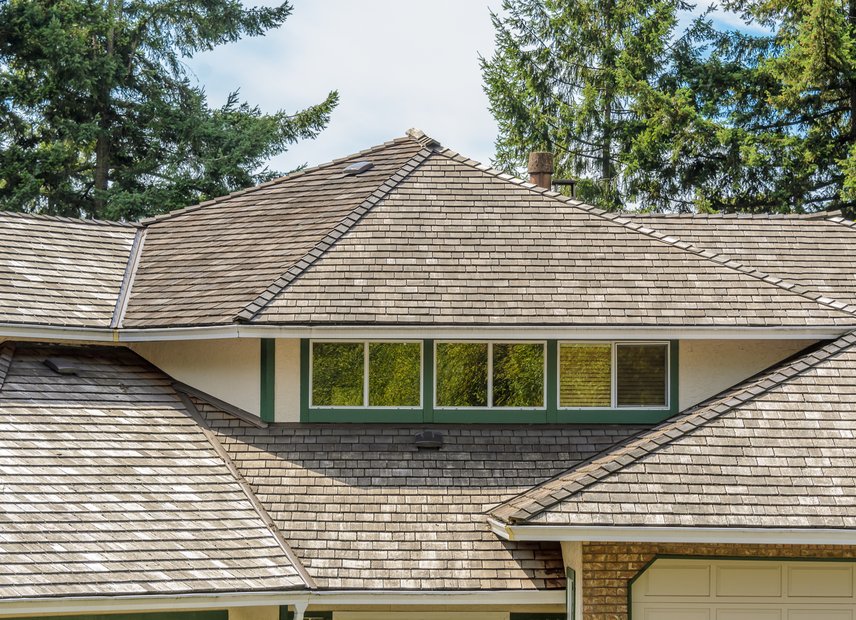
Cedar shake sits on many Greenwood Village estates because nothing else looks like it. Insurance carriers see the same roofs very differently. Between wildfire exposure and Front Range hail, wood roofing has become the material carriers most want off their books, and shake owners here are feeling it at every renewal. Here is what is happening, why claims get contested, and the options worth weighing before you are forced to choose.
Surcharging, restricting, or flatly declining wood shake has become increasingly common among carriers writing Colorado homes. Two exposures drive it. Fire is the obvious one: untreated wood roofing is the first thing an underwriter flags in a state that has watched grass fires reach suburban streets. Hail is the quieter one. The Front Range takes more large hail than almost anywhere in the country, and older shake, dried and brittle after decades of sun, splits far more readily than it did at year five. Neither judgment is about your specific roof, and that is the frustration. Much of the tightening is portfolio math applied to a whole category, which is why documented condition on your particular roof matters more than it ever has.
The squeeze shows up in predictable forms. Premiums on wood-roof homes climb faster than the rest of the market. Carriers add ACV-only roof endorsements, which quietly convert roof coverage from replacement cost to depreciated value. Non-renewal letters arrive citing roof type or roof age. And more carriers now demand inspection photos or a paid certification before they will renew at all. None of this waits for a claim; plenty of Greenwood Village shake owners with a clean claims history have opened one of these letters. Read every renewal packet line by line, and if an endorsement changed, ask in writing what triggered it and what would reverse it.
When hail does hit, shake claims turn into arguments about wood. A fresh hail split shows clean, bright wood inside the break, often with a visible impact mark at the point of contact. Weathered checking, the natural cracking shake develops over decades, is gray all the way through and follows the grain with no impact point. Adjusters lean on that distinction to reclassify storm damage as wear, and on an older roof the line gets genuinely blurry. The counter is timing and evidence: an inspection soon after a dated storm, close-up photos of bright-wood splits, and a count per slope. Wait a year and those same splits weather gray, and the argument is gone.
At claim time or replacement time, shake owners face three paths. Like-for-like cedar keeps the look, and keeps the insurance squeeze that comes with it. Synthetic Class 4 shake keeps most of the look while changing the insurance conversation entirely; our comparison of synthetic and natural cedar shake walks through the trade-offs. Or convert materials completely. Weight decides the permit paperwork: moving to a lighter covering such as asphalt or most synthetics needs no engineering, while moving to a heavier one such as concrete tile requires a structural evaluation sealed by a Colorado-licensed design professional before the city issues a permit. Our guide to structural letters for material changes explains how that works and what it costs you in time.
Before choosing a path, make your carrier commit on paper. Ask four things. Will replacing with a Class 4 synthetic change my premium, and by how much? Is my roof currently on an ACV endorsement, and what restores replacement cost coverage? Would you non-renew this policy if I install natural shake again? And what documentation of roof condition do you accept? Get the answers in writing, because promised discounts have a way of shrinking by renewal time.
A dated, documented inspection is also your best pushback against blanket wood-roof rulings. A carrier told only that the roof is old shake behaves differently than one holding a photo report showing sound, maintained shake with no active failures. We provide exactly that report, free, with every inspection. Reach us here or start with our cedar shake roofing page.
Tell us where the roof is and we will call you back the same business day. (720) 702-8770