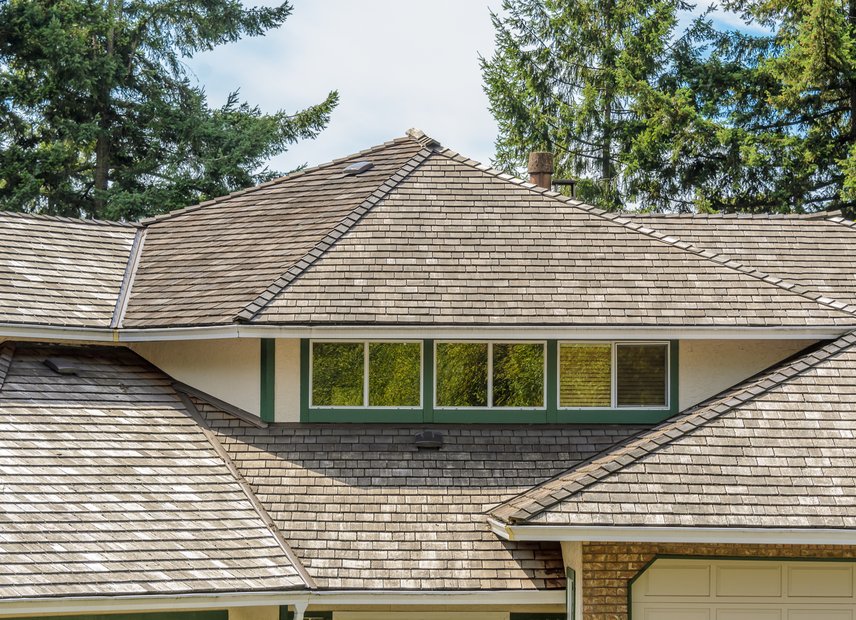
Cedar shake reads like Greenwood Village. The wooded estates east of I-25 and the semi-rural acre lots to the west were largely built when shake was the default premium roof, and plenty of them still carry it. Shake is also one of the most expensive roofs to buy and, quietly, one of the most expensive to own. This guide covers both numbers, because the install price is only half the story.
Cedar shake pricing starts with the wood itself. Shakes come in grades, and thick, edge-grain premium material costs far more than thinner flat-grain stock while holding up much better under Colorado sun and hail. Labor is the bigger number. Shakes go on course by course, hand-nailed, and the trade has a steep learning curve; crews that do it well are scarce and they price accordingly. Tear-off adds its own line, because old shake comes off bulky and heavy and disposal fees follow the weight.
Stack those together and shake lands well above the Denver metro asphalt anchors, where a typical replacement commonly runs $9,000 to $18,000. Like tile, shake commonly prices at a multiple of asphalt on a comparable roof.
Wood is the only roof that needs ongoing care to reach its rated life. Periodic cleaning, treatment, and spot repairs are not optional extras on a shake roof in Colorado; skip them and the roof ages in fast-forward. Over a couple of decades those visits add up to real money, which means the honest comparison against other materials is lifetime cost, not install cost. The gap between shake and a Class 4 asphalt roof is wider at year twenty than it looks at year one. Our cedar shake maintenance guide lays out the schedule and what each visit involves.
The second hidden cost arrives at every renewal. Many carriers surcharge wood roofs, some decline them outright, and a shake roof on a $1,000,000-plus home can move the premium by a noticeable amount each year. Terms vary widely by carrier and policy, so treat this as a question to ask, not a number to assume. The direction is consistent, though: wood typically costs more to insure than a Class 4 rated roof, and some insurers now attach inspections or age limits to shake before renewing. We break down the market's posture in our guide to cedar shake insurance problems.
Composite shake changes the math. The synthetic material itself typically costs more than natural cedar, but maintenance drops to near zero and most products carry a Class 4 impact rating, which commonly earns insurance discounts of 15 to 35 percent of the relevant premium portion, terms varying by carrier. Add the avoided treatment visits and the avoided surcharges, and lifetime cost frequently comes out below natural shake even though the day-one bid is higher. Whether it looks right on your home is a separate and fair question. Our synthetic vs natural cedar shake comparison covers appearance, durability, and cost side by side.
Greenwood Village's own roofing guidelines carry a dedicated cedar shake section. Shake needs a minimum 4:12 slope here, and like every roof in the city it needs an ice barrier at the eaves extending 24 inches inside the exterior wall line. A reroof of 100 square feet or more takes a permit either way.
When a shake roof reaches end of life, you face a real decision: replace with shake, or convert to something else. Converting to a lighter material such as asphalt or most composites needs no structural letter, because the city's letter requirement applies only when dead load increases. Going the other way, shake to tile, does trigger it. That asymmetry makes converting away from shake administratively easy, which is one reason so many estates already have.
Start with facts instead of brochures. We offer a free documented inspection with a written photo report on any shake roof in the Village. Schedule yours, or read about our cedar shake roofing services.
Tell us where the roof is and we will call you back the same business day. (720) 702-8770