Cedar shake is the one roof in Greenwood Village that genuinely needs a maintenance program. Tile and asphalt mostly want to be left alone. Wood does not. Shake moves, splits, and weathers by design, and a shake roof that gets honest attention twice a year will outlast a neglected one by a decade or more. Here is the calendar we put estate shake roofs on, and the mistakes that end them early.
A shake roof is a wood system, and wood never stops moving. It swells in a wet May, shrinks through a dry August, and slowly splits along the grain as sun breaks down the surface. None of that is a defect. The system is built for it: thick split shakes shed most of the water, and felt interlays between the courses catch what gets through the keyways, the vertical gaps between shakes. Maintenance exists to keep small problems away from that felt. Once water reaches the interlays and the decking, you are no longer maintaining a roof, you are repairing one. On the estate lots we work, that line is worth thousands.
Twice a year, spring and fall, plus a check after any major hail event, a shake roof here needs the same short list of work:
Two mistakes age a shake roof faster than any storm. The first is pressure washing. A pressure washer strips the soft springwood out of the grain and can take years off the roof in one afternoon. It leaves the surface fuzzy, thin, and thirsty. If a bid includes pressure washing shake, end the conversation. The second is careless foot traffic. Shake breaks under a heel placed mid-span, quietly, and shows up as a leak two winters later. Steps belong on the lower part of each course, over supported wood, and never on wet or frosted shakes.
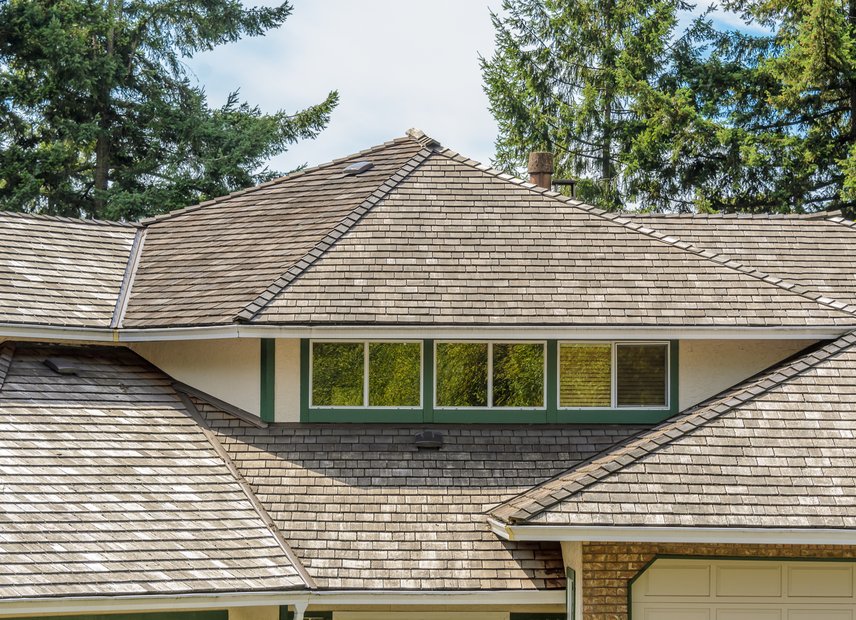
Uniform silver-gray is patina, not failure. A twenty-year-old shake roof that has grayed evenly, holds its lines, and shows tight keyways can have real life left. The end looks different: widespread splitting across many slopes, butt ends weathered thin and papery, shakes that rock underfoot because fasteners have worked loose, and felt visible through open keyways. When that pattern runs across the whole roof rather than one bad slope, no treatment brings the wood back.
Maintenance rounds grow. The year the repair list jumps from a dozen shakes to fifty, the math changes, and it is fair to ask whether the next few years of upkeep will cost more than they buy. Our guide to cedar shake roof cost in Greenwood Village covers what replacement in kind runs. Many estate owners instead move to a Class 4 composite that keeps the look; the tradeoffs are in our synthetic versus natural cedar shake comparison. Either way, the decision should come from a documented condition report, not a salesman's glance.
Colorado carriers have turned hard on cedar shake, and a neglected roof gives them every excuse; our guide to cedar shake insurance problems covers that landscape. Documentation is the counterweight. A dated photo record showing a maintained, sound roof before a storm makes a hail claim far harder to deny and helps at renewal time. That record is exactly what our free documented inspections produce, and we treat them as the backbone of any shake maintenance program.
If your shake roof has gone more than two years without a hard look, call (720) 702-8770 or request a free documented inspection. We will tell you honestly whether it needs ten shakes or a plan.
Tell us where the roof is and we will call you back the same business day. (720) 702-8770