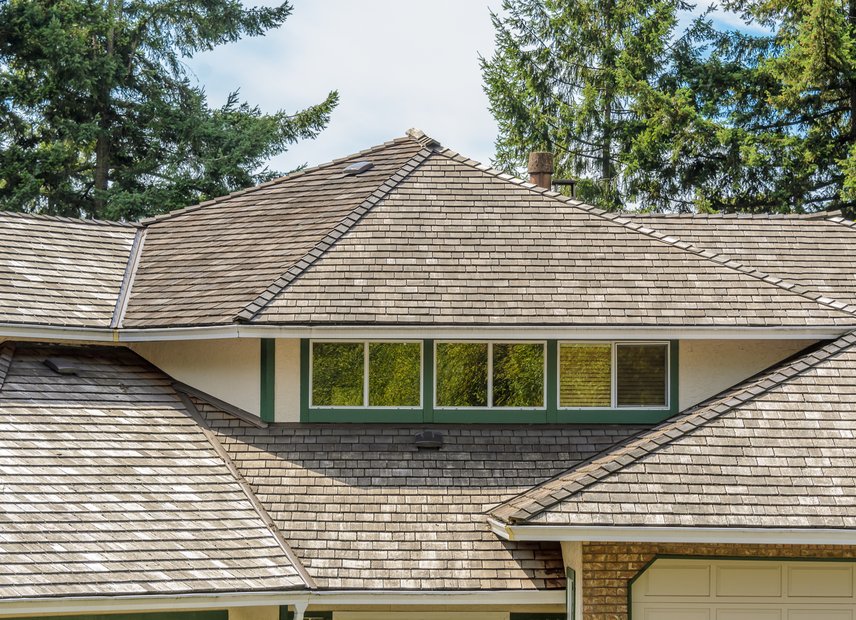
Drive the estate streets west of I-25 or the gated lanes of The Preserve and you will see shake roofs everywhere. What you cannot tell from the curb is which ones are real wood. Synthetic shake has improved to the point where even roofers take a second look from the driveway. This guide compares the two materials honestly, on looks, performance, weight, insurance, and cost, so you can decide which one belongs on your Greenwood Village home.
Synthetic shake, often sold as composite shake, is an engineered roofing product made from polymer or rubber compounds molded from castings of real split cedar shakes. The better lines pull their texture straight from actual wood, grain and saw marks included, and use enough different molds that the finished roof avoids an obvious repeating pattern. The pieces install one at a time with coursing and exposure similar to wood, so the roof reads like shake from every angle.
One practical advantage shows up before the first bundle is delivered. Most synthetic shake products weigh about the same as cedar or less. That matters here because Greenwood Village requires a sealed structural letter whenever a new roof material increases dead load. Swapping cedar for synthetic usually skips that step. Our guide to structural letters for roof material changes explains the rule.
From the street, the better synthetics are excellent. Most people cannot pick them out, and the depth and shadow lines hold up at normal viewing distance. Up close is a different story. Molded edges repeat, and the surface reads slightly more uniform than split wood ever does. If a guest is judging your roof from the sidewalk, both pass. If you are judging it from a ladder, you will know.
The bigger difference arrives with age. Real cedar weathers toward silver gray over several years, unevenly at first and then handsomely. Synthetic shake is colored through or coated to hold its factory tone for decades. Some homeowners want the silvered look and consider the fixed color a loss. Others have watched a wood roof streak and curl and consider it the whole point.
Class 4 impact ratings, the highest hail rating a roof covering can carry, are common across synthetic shake lines. That matters in a city that took 2.00 inch hail in June 2018. Wood splits under big stones, and every storm ages it. Synthetics also typically carry a Class A fire rating as installed, while cedar needs pressure treatment to get near that. Rot, insects, moss, and woodpeckers, the slow killers of shake roofs on our tree-heavy lots, do not touch polymer.
Lifespan claims on synthetics commonly run 40 to 50 years. Treat those as projections, because the products have only been on roofs in volume for a few decades. A well-maintained natural shake roof typically delivers 25 to 35 years along the Front Range, and a neglected one far less.
Colorado insurers have soured on wood roofs. Some surcharge them, some restrict coverage, and a few decline them outright. Synthetic shake keeps the look while stepping out of the wood-roof squeeze, which we cover in our guide to cedar shake insurance problems. Class 4 synthetics also commonly qualify for impact-resistance discounts, often reported at 15 to 35 percent of the wind and hail portion of the premium. Carriers differ, so get any discount in writing before you commit.
On price, synthetic shake is a premium material. Installed cost typically lands well above architectural asphalt and in the same range as quality cedar, sometimes higher. The lifetime math is where it competes: no treatments, no steady repairs to split shakes, and fewer hail claims. Our cedar shake roof cost guide lays out what real wood costs to install and to keep.
Many Greenwood Village estates sit inside covenant-controlled or gated communities, and plenty of design standards were written when wood shake was the default. Some associations have since approved specific synthetic profiles. Others still want samples and a design review meeting first. Check your covenants early and build approval time into the project. We can supply samples and product documentation for the packet.
Real cedar still wins in a few cases. Some owners want wood because it is wood, and no molded product satisfies that. A historic or architect-designed home may deserve the authentic material. We install and care for both. Call (720) 702-8770 or use our contact page for a free documented inspection, and see our cedar shake roofing service for either path.
Tell us where the roof is and we will call you back the same business day. (720) 702-8770