
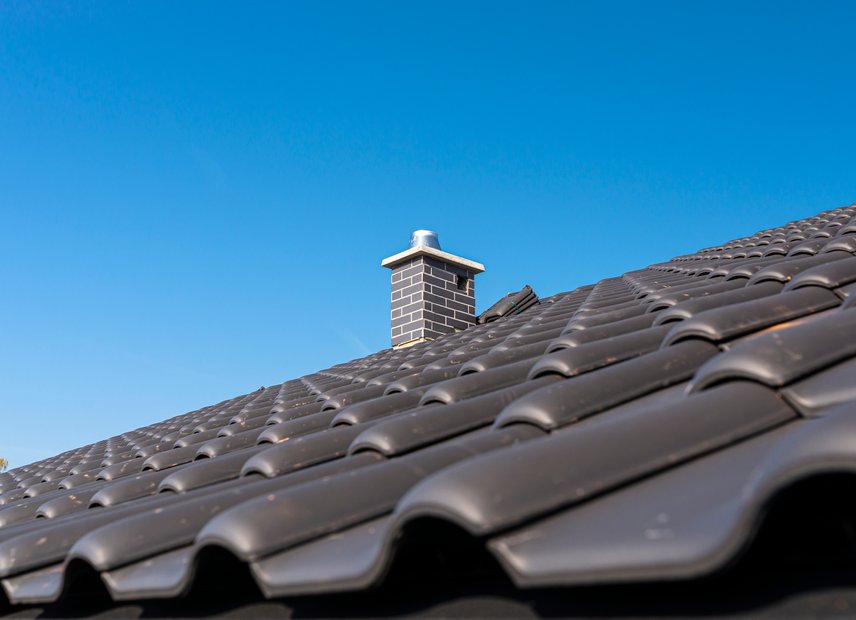
Concrete and clay tile is the signature roof of east Greenwood Village. It is common across Greenwood Hills, Orchard Hills and Cherry Lane, standard issue in The Preserve, and the city's own roofing guidelines carry a dedicated tile section, which tells you how routine this material is here. It is also the material where hiring a generalist hurts most, because on a tile roof the tiles are the armor and the underlayment beneath them is the actual roof.
Concrete tile lasts half a century or more in this climate. The felt or synthetic membrane underneath it does not. On many 1980s and 1990s Village roofs the tile looks fine from the driveway while the underlayment beneath has gone brittle, and the first sign is a ceiling stain after a spring upslope storm. A tile roof that leaks does not usually need new tile. It needs new underlayment under the tile it already has. That restoration costs a fraction of full replacement, keeps the look the HOA approved decades ago, and resets the clock.
Greenwood Village requires the same permit as any roof once 100 square feet of covering changes, and tile carries two extra wrinkles. First, slope: 3:12 minimum for most systems, steeper for some clay profiles. Second, weight: if a home built for asphalt wants tile, the city requires a structural evaluation or truss verification letter sealed by a Colorado licensed design professional. We coordinate the engineer, and for new construction tile the city's mid-roof inspection rules for underlayment, flashing and battens are part of our standard sequence.
Most Village tile is concrete: medium and high profile S curves and flat shake profile tile from the big western manufacturers, laid through the 1980s and 1990s build-out. Common concrete profiles remain in production, which is why matched repairs are usually possible. Clay is rarer, mostly on Mediterranean architecture, and behaves differently: harder, more brittle under impact, and often needing reclaimed sources for a match. When we repair, we identify the exact profile first, source the match, and harvest from hidden slopes when production stock no longer exists. A repair with the wrong profile telegraphs from the street and quietly ruins resale photography, which on a seven figure house is not a small thing.
Tile handles our snow load fine, the city designs for 30 psf and tile systems are engineered well past it, but winter is when cracked tile does its damage. Water finds the crack in October, freezes in November, and by March the crack is a spall and the underlayment beneath has taken a season of moisture. This is why our post-hail tile inspections happen in the same season as the storm rather than whenever the schedule loosens: a strike found in July is a tile swap; the same strike found in April is often an underlayment repair too. Snow country tile roofs also need their valleys and dead spots kept clear, and we check both on every visit.
Gutters and drainage earn a mention on tile as well. Tile sheds water faster than asphalt, and on the Village's long custom rooflines that concentrated flow overwhelms undersized gutters at exactly the corners where landscaping is most expensive. When we work a tile roof we check the drainage math along with the field, because a perfect roof draining onto a flooded foundation is not a finished job.
The July 9, 2026 storm put 1.5 inch hail on the Village, and tile roofs took strikes along with everything else. Concrete tile can shrug off stones that destroy asphalt, but big hail cracks tile, and a cracked tile passes water into that aging underlayment. If your tile roof has not been walked since July 2026, our free inspection will tell you in an afternoon whether you have a claim, a repair, or a clean bill. Call (720) 702-8770.
Tell us where the roof is and we will call you back the same business day. (720) 702-8770