The Denver Tech Center runs along I-25 and Belleview inside Greenwood Village, and most of the attention goes to the office towers. This page is for the people who live around them. The corridor's edges hold townhomes, condominiums and single-family pockets, and those roofs have their own realities: association ownership, shared planes, tight weekday schedules, and on July 9, 2026, a direct hit from hail. Here is how we handle roofing around the DTC.
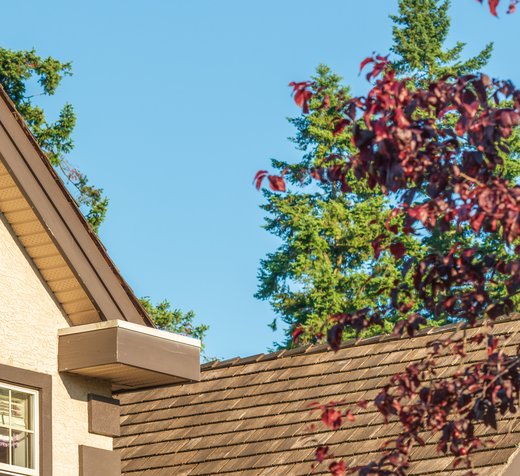
The housing stock near the corridor is a mix. Townhome rows and condo buildings sit closest to I-25 and Belleview, with single-family pockets tucked behind them, and much of it is maintained by an association rather than an individual owner. Architectural asphalt is the most common roof, with concrete tile on some communities.
Association roofs age on a community schedule. Whole phases were built together, so whole phases wear out together, and a leak in one unit is rarely an isolated story. We work both sides of that: single-unit repairs for owners, and phased assessment and replacement planning for boards.
On July 9, 2026, quarter-size hail fell in the DTC, as reported, part of a storm that dropped hail up to 1.5 inch elsewhere in Greenwood Village with gusts past 60 mph. Quarter-size hail sits right at the damage threshold for asphalt shingles that are past their first decade: granule loss, bruised mats, and fractures that show up as leaks a year later. Wind that strong also lifts tabs and breaks seals.
Not every roof near the corridor was damaged, and we will say so when yours was not. The record here is longer than one storm, the 2018 event brought hail to 2.75 inch, and our Greenwood Village hail history post lays out the full timeline. What matters now is documentation while the evidence is fresh.
Boards do not need a sales pitch, they need a record. We provide documented condition reports with photos of every building, written so they can go straight into meeting minutes. For reserve planning we add remaining-life estimates and phased replacement options, so the board can budget against real numbers instead of a guess.
Insurance planning belongs in that file too. Master policies commonly carry separate wind and hail deductibles, often set as a percentage of building coverage, and on association-scale buildings that is serious money. Our guide to hail deductibles on high-value properties explains the math. After a storm, per-building damage documentation is what keeps an association claim organized.
Townhome roofing has a coordination problem single-family roofing does not. Roof planes run continuously across party walls, so a repair that stops at a property line can fail at the property line, and a leak often shows up two units away from its origin. We trace water to its source before anyone pays for the wrong repair, and we coordinate across owners when a shared plane needs work. Who owns which part varies by community, so check your declarations.
We also plan around how the corridor actually lives. Firm arrival windows, driveway and garage access kept open, loud phases flagged in advance for people working from home. Free documented inspections are the starting point for boards and individual owners alike. Contact us to schedule one, and if the July storm left its mark, our hail damage repair team will build the claim file with you.
Tell us where the roof is and we will call you back the same business day. (720) 702-8770