
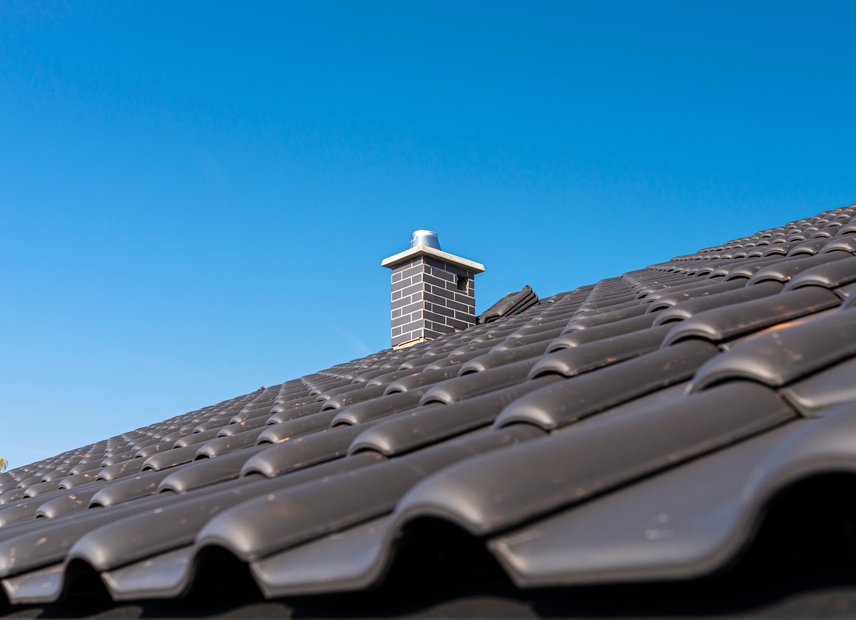
Tile handles hail better than asphalt, and insurance carriers know it. That cuts both ways. The same toughness that protects your home gives an adjuster room to argue that nothing up there broke, or that whatever broke was broken long before the storm. We document tile hail claims across Greenwood Village, and the ones that get paid share one trait: evidence too specific to argue with.
Hail hurts tile in three recognizable ways. It cracks tiles, usually a clean fracture radiating from the impact point. It shatters them outright when the stones get big enough. And it spalls concrete tile, blasting shallow divots out of the surface that expose the lighter material underneath. The 2.75 inch hail that hit Greenwood Village on June 19, 2018 produced all three across the tile neighborhoods east of I-25.
Honesty matters here, because adjusters actively look for other causes. Broken corners clustered along ridges and walk paths usually mean foot traffic from a satellite installer, a painter, or a previous roofer. Fine spiderweb crazing on older concrete tile is often a curing artifact from manufacturing, not impact. An inspector who circles every blemish and calls it hail hands the carrier a reason to distrust the entire claim. We separate impact damage from wear and mechanical breakage before anything gets submitted.
A full tile replacement on a Greenwood Village estate can run several times the cost of an asphalt roof, and carriers respond to that exposure. Tile claims routinely draw senior adjusters, third-party engineering reports, and line-by-line scope disputes an asphalt claim would never see. The most common fight is attribution: the carrier agrees tiles are broken but blames age, foot traffic, or thermal movement instead of hail. The second is scope, offering to swap thirty tiles when the damage pattern justifies whole slopes. Neither fight is winnable with a handful of phone photos.
Tile is not the waterproofing on your roof. The underlayment beneath it is, and underlayment ages on its own schedule regardless of weather. If your tiles are intact but the felt under them is brittle, that is wear, not hail damage, and a denial on those grounds is usually correct. Where it gets complicated is the mixed claim: hail-broken tile on two slopes over underlayment that was already near the end of its life everywhere. The claim owes for the storm damage, not a free re-felt of the whole roof. We tell homeowners that plainly before filing, because chasing an underlayment payout that cannot win burns the credibility the legitimate part of the claim needs.
NOAA storm records list hail in Greenwood Village at 1.75 inches in July 2016, the 2.00 and 2.75 inch double event of June 19, 2018, plus 1.00 inch stones in 2019 and up to 1.25 inches in May 2024. On July 9, 2026, as reported, hail to 1.5 inches hit Greenwood Village directly, with quarter size stones through the DTC and gusts past 60 mph. Tying your damage to a dated, documented event beats a vague claim that a storm came through at some point, every time. Our hail history page covers the full record.
On the roof itself, tile claims are won with per-tile mapping: a slope diagram with every broken tile numbered, chalk-marked close-ups with a scale reference in frame, and wide shots that show the impact pattern across the field. When the adjuster's report says thirty tiles and ours maps ninety with photos of each, the conversation changes.
Two questions decide repair versus replacement. First, can your tile profile still be bought? Many profiles installed here in the 1980s and 1990s are long discontinued, and a near-match patch on a street-facing slope is visible from the curb. That opens the matching fight, which we cover in our guide to the matching problem on Colorado roof claims. Second, how widespread is the breakage? Scattered broken tiles with an available match argue for repair. Widespread impacts, or any real damage in a discontinued profile, argue for a larger scope.
If the claim ends in replacement, plan for the city's tile-specific inspection: Greenwood Village requires an inspection after the underlayment, flashing, and battens are installed, with no more than 25 percent of the tile loaded before the inspector signs off. We build it into the schedule as a matter of course.
If hail has been over your tile roof, start with a free documented inspection and a written photo report. Reach us here or see how we handle hail damage repair from first photo to final inspection.
Tell us where the roof is and we will call you back the same business day. (720) 702-8770