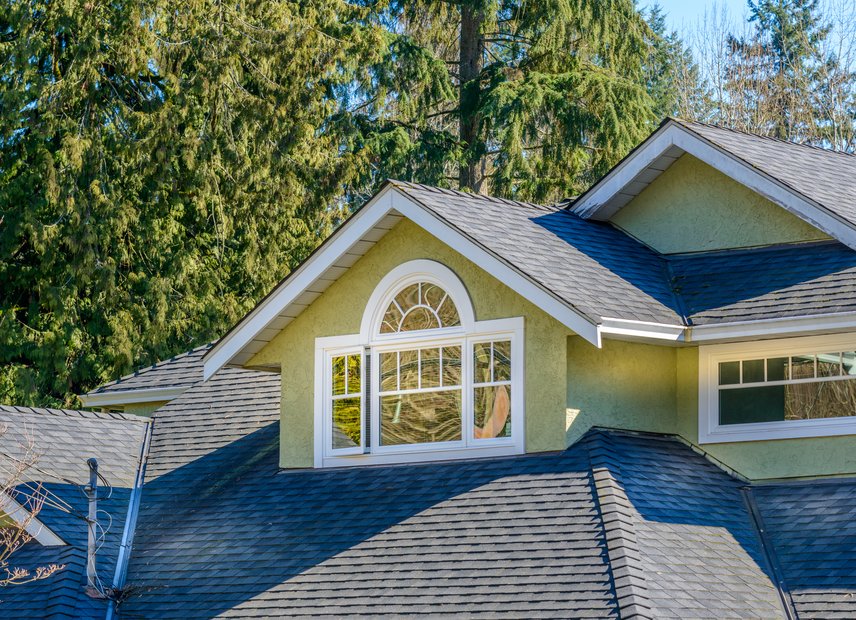
Think of flashing as your roof's plumbing. The tile, shake, or shingles shed most of the water, but every place the roof meets a chimney, a wall, another roofline, or a gutter, metal has to carry water through the joint. More leaks start at flashing than in any field material, and the complex rooflines on Greenwood Village estate homes multiply those joints by the dozen.
Field materials rarely fail first. A tile or a Class 4 shingle can sit in the sun for decades doing its one job. Flashing works harder. It bridges materials that expand at different rates, catches concentrated water flow, and depends entirely on how carefully one installer cut and layered it. When we trace a ceiling stain in a custom home, the trail ends at a flashing detail far more often than at a broken shingle. On a 6,000 square foot roof with multiple dormers, chimneys, and intersecting planes, there can be several hundred linear feet of metal, and any foot of it can be the problem.
Here is the metal a full custom roof actually carries:
Galvanized steel is the budget metal. It works, but its coating gives out over a couple of decades, often sooner than the roof above it. Prefinished steel costs a little more, matches the roof color, and lasts meaningfully longer. Copper is the premium choice. It commonly outlasts the roof itself, solders into truly watertight assemblies, and weathers to the patina that looks right against tile and shake on estate homes. On a roof planned to serve 50 years, copper valleys and chimney flashing are less an upgrade than a matching of lifespans. Gauge and workmanship matter as much as the metal itself, since thin valley stock wears through at the waterline years early.
Flashing is buried cost. Two bids can describe the same shingle and differ by thousands, and the difference often hides in the metal: one crew replaces every flashing, the other reuses what is there and caulks the doubtful spots. Reused step flashing has old nail holes and fatigue bends. Reused valleys carry decades of grit wear. A new roof installed over old metal inherits the old roof's leaks, and the callback arrives long after the crew is gone. When you compare bids, ask which flashings are being replaced and in what metal, and get it in writing.
Estate roofs here often change materials mid-roof: a tile main roof with shingle wings, a shake roof dying into a shallow porch tie-in. The pairing is common on our 1980s and 1990s customs because porch and addition slopes are often too shallow for the main roof material. Every transition needs its own flashing and underlayment detail, and the shallow sections carry their own slope requirements, which we cover in our guide to roof slope rules for tile, asphalt, and shake.
Our free documented inspections photograph every flashing point on the roof: each valley, every chimney, each wall transition, and the kickout locations, with notes on metal type and condition. You get the written photo report either way. Book through our contact page or call (720) 702-8770, and if a flashing detail is already leaking, our roof repair service handles metalwork on every roof type we install.
Tell us where the roof is and we will call you back the same business day. (720) 702-8770