
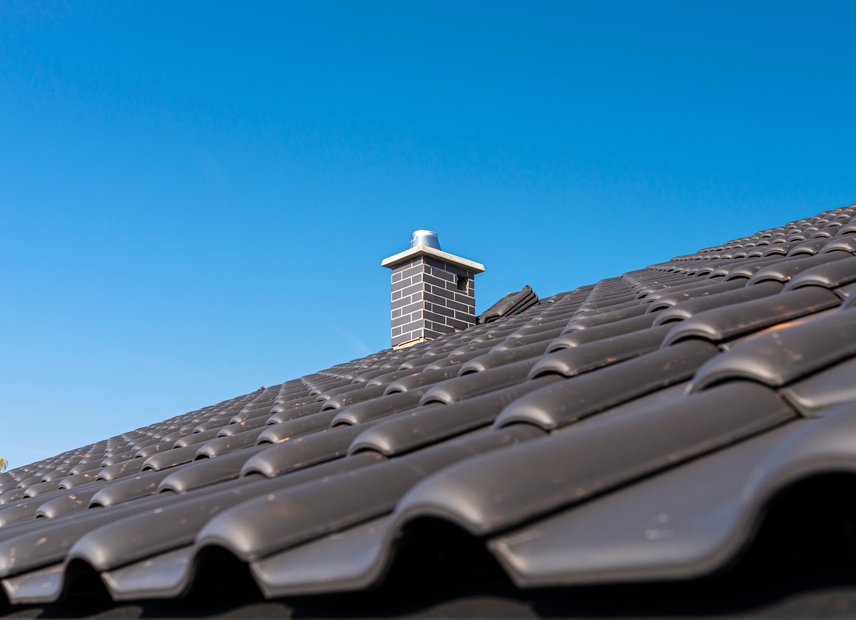
A broken tile looks like the simplest repair in roofing. It is not. On the tile roofs common across Greenwood Hills, Orchard Hills, and Cherry Lane, more tile gets broken by the person fixing the roof than by the hail that cracked the first one. Tile repair done right is a specialist trade, and it pays to know what right looks like before anyone climbs a ladder.
Concrete and clay tile carry foot traffic badly. Each tile is strong the way it was designed to be loaded and fragile every other way, and a repair tech who does not know the difference leaves a trail of hairline cracks that surface as leaks over the next few years. Proper technique is specific: steps land on the lower third of the tile where it is supported by the course beneath, weight stays spread across two tiles, and on brittle or steep roofs foam pads or walk boards distribute the load. Cold tiles crack easier than warm ones, so winter repairs demand extra care. None of this is exotic. It is simply learned on tile roofs, not asphalt ones.
Almost every tile repair visit is some mix of four jobs:
Plenty of tile on 1980s and 1990s Greenwood Village customs is no longer made. That is not a dead end. The best source is your own attic stock, the spare tiles the original crew left in the garage rafters; guard those like tools. Beyond that, salvage suppliers keep discontinued profiles recovered from tear-offs, and a good match usually exists if someone is willing to hunt for it. Matching matters on claims too. When a reasonable match cannot be found after storm damage, Colorado's matching rules can come into play, and our guide to the matching rule on Colorado roof claims explains how.
Tile outlives its underlayment. The tile on a forty-year-old roof may be fine for another forty while the felt beneath it has gone brittle and torn at every fastener. The tell is pattern: leaks in different rooms in different storms, patches that hold a season and then fail nearby, felt that crumbles when a tile is lifted. At that point more patching is money thrown at a roof that needs a full lift and relay, meaning new underlayment under the existing tile. An honest contractor says so before the third patch, not after the sixth.
We photograph the damage before touching it, work off foam pads, and photograph the finished repair so you can see exactly what changed without climbing a ladder. If we break a tile getting to yours, we replace it and say so. And if the honest verdict is that the underlayment is done, you get that verdict, not a patch invoice every spring. One useful city fact: Greenwood Village exempts roof repairs under 100 square feet from permits, per the city's roofing guidelines, so a normal tile repair carries no permit cost or delay.
Cracked, slipped, or missing tiles? Call (720) 702-8770 or schedule a free documented inspection, or start at our roof repair page.
Tell us where the roof is and we will call you back the same business day. (720) 702-8770