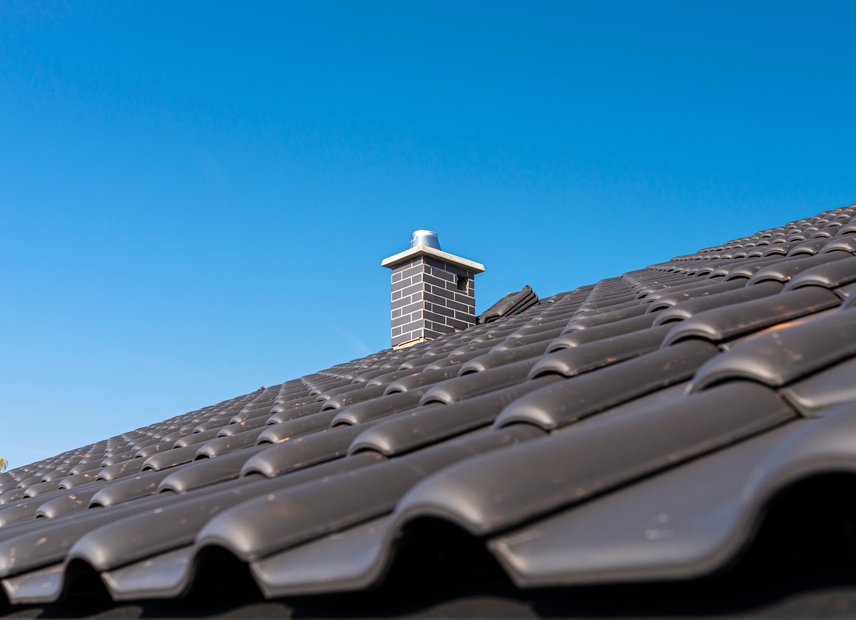
Tile is part of the streetscape in Greenwood Hills, Orchard Hills, and Cherry Lane, and "tile" on an estimate can mean two different materials. Concrete and clay look related from the curb but part ways on cost, color, weight, and how they handle Colorado weather. Here is an honest comparison for Greenwood Village homeowners choosing between the two, or trying to figure out which one is already overhead.
Both materials are heavy. Concrete tile commonly runs 900 to 1,100 pounds per square, and clay is often lighter per square, though it varies widely by profile, so never assume. What matters for permitting is the change, not the raw number. Greenwood Village requires a structural evaluation or truss verification letter sealed by a Colorado-licensed design professional whenever the new roof increases dead load. Converting from asphalt or shake to either tile family almost always triggers it. Replacing tile with comparable tile usually does not. Our guide to structural letters for roof material changes walks through the process.
Concrete is the value play of the two. It typically installs for meaningfully less than clay while delivering the same general look, which is why most newer tile roofs in the Denver metro are concrete. Clay is the premium option, with material and labor both costing more, and imported profiles pushing higher still.
Color is where clay earns some of that premium back. Clay's color is fired in and essentially permanent. Concrete carries its color in the surface or a slurry coat, and decades of sun gradually soften it, sometimes unevenly. A 40-year-old clay roof usually still shows its original color. A 40-year-old concrete roof usually looks weathered.
| Factor | Concrete tile | Clay tile |
|---|---|---|
| Installed cost | Lower of the two | Premium |
| Color over time | Surface color weathers | Fired color, permanent |
| Freeze-thaw | Generally handles it | Must be rated for it |
| Minimum slope | 3:12 | 3:12, some systems 5:12 |
Colorado's freeze-thaw cycles are the classic clay killer. Clay tile made for warm climates can absorb moisture, freeze, and spall its surface off winter by winter. Clay rated for freeze-thaw service performs well here, so the question is not whether clay works in Colorado but whether the specific tile is rated for it. Concrete generally handles our cycling without drama.
Hail treats both families about the same. Small stones bounce; big stones crack tile. The June 2018 storm that dropped hail up to 2.75 inches on Greenwood Village cracked plenty of both kinds. What happens next with your insurer is its own subject, covered in our guide to tile roof hail claims.
Both materials routinely deliver 50 years and more. The underlayment beneath them does not. Felt and synthetic underlayments typically give 20 to 30 years, and once they fail the roof leaks no matter how good the tile looks from the street. That is the real maintenance cycle of a tile roof: somewhere in the middle of the tile's life, a crew lifts the tile, replaces the underlayment and flashings, and relays the same tile. A lift and relay costs a fraction of a new roof and resets the clock. Budgeting for it beats pretending a 50-year roof needs nothing for 50 years.
The city's roofing guidelines set a 3:12 minimum slope for tile, and some clay systems require 5:12 per their installation instructions, a detail that catches shallow additions and porch roofs. Our guide to roof slope rules covers the full picture. Discontinuation is the other shared risk. Tile profiles leave the market constantly, and a partial hail repair can turn into a matching fight with your carrier on either material, explained in our matching rule guide.
Locally, tile concentrates in the upscale neighborhoods, Greenwood Hills, Orchard Hills, and Cherry Lane among them, on both concrete and clay roofs from the custom-building years of the 1980s and 1990s. Not sure which material you own? We will tell you. Call (720) 702-8770 or book through our contact page for a free documented inspection, and see our tile roofing service for both families.
Tell us where the roof is and we will call you back the same business day. (720) 702-8770